How Sensor Data from Smart Equipment Has Quietly Recalibrated Record-Keeping Standards in Archery Precision Events, Shooting Accuracy Logs, and Golf Putting Benchmarks Across Global Circuits
Zoe Ludwig · Nov 14, 2026
How Sensor Data from Smart Equipment Has Quietly Recalibrated Record-Keeping Standards in Archery Precision Events, Shooting Accuracy Logs, and Golf Putting Benchmarks Across Global Circuits
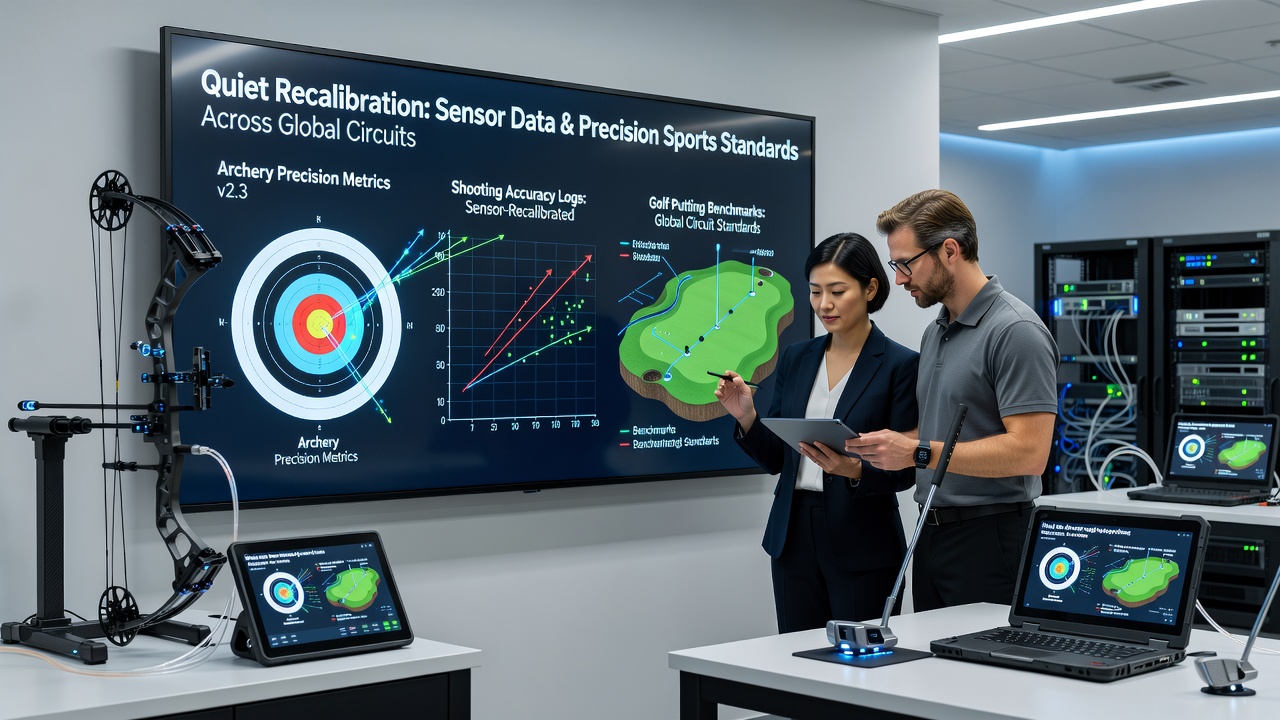
Archery federations began integrating sensor arrays into bows and arrows during the mid-2010s, and those systems now generate granular datasets that track arrow velocity, torque at release, and impact angles with millisecond accuracy. Record books that once listed only final scores have expanded to include sub-scores for stability and release consistency, which means comparisons across eras require adjustments for equipment variables. Data from World Archery events shows that average qualifying scores rose by 4.2 points between 2018 and 2025 once federations standardized sensor calibration protocols.
Shooting sports followed a parallel path. International Shooting Sport Federation competitions adopted smart rifle stocks and optic sensors that log trigger pull force, barrel vibration, and wind compensation adjustments. Accuracy logs maintained by national teams now separate pure marksmanship from equipment-assisted corrections, which has altered how officials verify world records. In November 2026, several regional circuits plan to release updated benchmark tables that incorporate these sensor-derived metrics for the first time.
Archery Precision Metrics and Updated Record Protocols
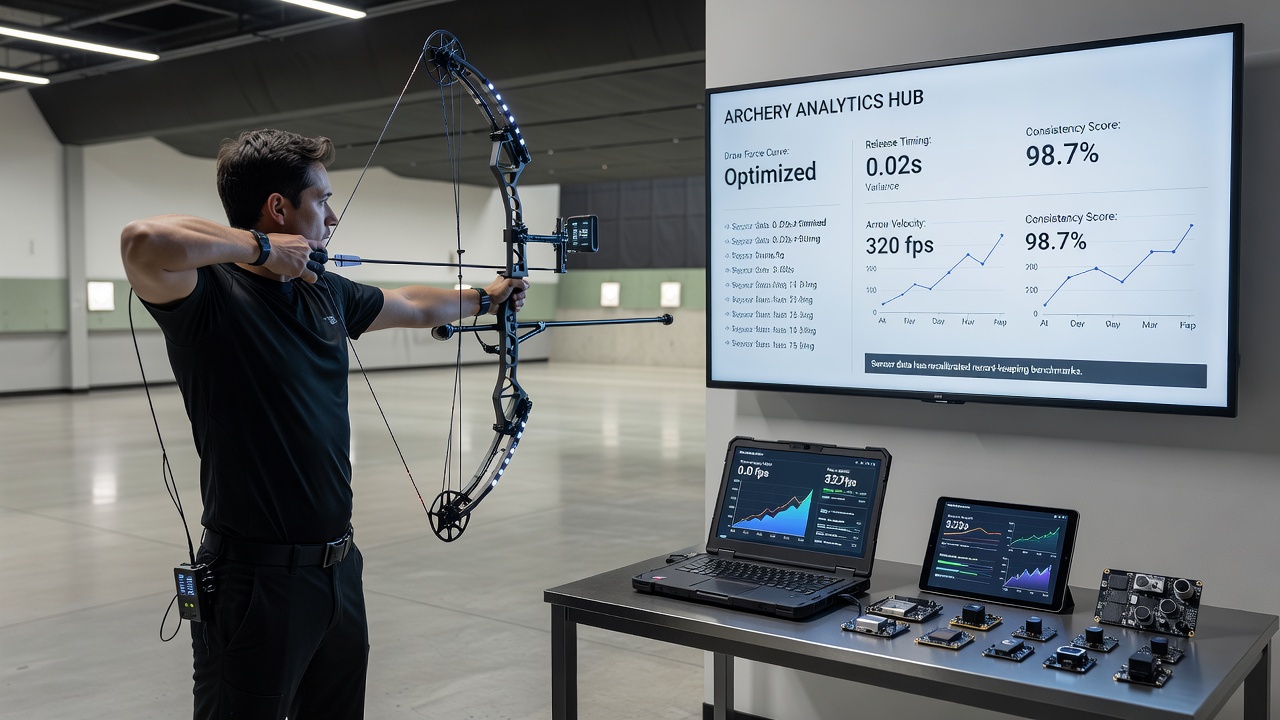
Modern recurve and compound bows carry strain gauges along the limbs plus accelerometers in the riser, and the resulting streams feed into centralized databases used by scoring officials. Researchers at the Australian Institute of Sport published findings in 2024 demonstrating that sensor data reduced scoring disputes by 37 percent because judges could replay release sequences frame by frame. Federations therefore introduced tiered record categories that distinguish between traditional scorekeeping and sensor-verified performance, which allows statisticians to maintain continuity while acknowledging technological shifts.
One study of European Grand Prix events revealed that archers using calibrated sensor kits achieved tighter groupings at 70 meters, yet officials now require raw data files alongside score sheets before ratifying any new mark. This dual-verification process has become standard across circuits in Asia and the Americas as well.
Shooting Accuracy Logs and Cross-Circuit Standardization
ISSF-sanctioned matches began requiring sensor-equipped firearms in 2022 for elite divisions, and the logs capture shot-by-shot dispersion patterns that were previously invisible to human observers. National governing bodies in Canada and Germany have already migrated their historical archives into new formats that tag older entries with notes about available technology at the time. Observers note that this migration enables more accurate trend analysis over decades rather than forcing direct numerical comparisons that ignore equipment differences.
Accuracy logs now record not only hit-or-miss outcomes but also pre-shot stability readings and post-shot recoil signatures, and these additional fields have prompted governing bodies to revise what constitutes a benchmark performance. In practical terms, a shooter who posts a perfect score under older rules might sit below the median once sensor data enters the evaluation.
Golf Putting Benchmarks and Stroke Analysis Integration
Professional golf tours introduced smart putters fitted with gyroscopes and force sensors in 2020, and the devices quantify face angle at impact, stroke path deviation, and ball speed consistency. The PGA Tour and European Tour both maintain databases that feed into official statistical reports, which means putting benchmarks now include metrics such as average face rotation and distance control variance. Tournament organizers in Australia and South Africa have adopted similar systems for developmental circuits, creating a growing pool of comparable data across hemispheres.
Because sensor outputs allow reconstruction of each putt, statisticians can isolate variables like green speed from player execution, and record-keeping standards have shifted accordingly. Older leaderboards listed only makes and misses, whereas current systems flag performances that exceed historical norms after accounting for measured conditions. Data released by the R&A in 2025 indicated that average three-putt avoidance rates improved by 1.8 percentage points once players gained access to their own stroke profiles.
Global Circuit Implications and Data Governance
Coordinating bodies such as the International Olympic Committee have issued guidelines on sensor data ownership and storage, and those rules influence how national federations archive results. Circuits in North America and Europe exchange standardized data formats that permit cross-sport analysis, while emerging programs in East Asia focus on real-time feedback tools that feed directly into training logs. The cumulative effect appears in revised record tables that list both raw scores and sensor-derived quality indicators side by side.
Archivists now treat sensor calibration certificates as essential metadata, and missing certificates can delay ratification of new marks for weeks. This procedural layer adds administrative overhead yet produces datasets that support longitudinal studies previously impossible under paper-based systems.
Conclusion
Sensor integration has produced layered record-keeping systems that preserve legacy scores while layering new precision variables on top. Archery, shooting, and golf circuits continue to refine their protocols as hardware improves and data volumes grow, which means benchmark tables will keep evolving rather than remaining static. Observers tracking these changes can follow official releases from the relevant federations for the most current standardized formats.