How Officiating Technology Has Reshaped Foul Calls and Efficiency in Basketball, Hockey, and Soccer Since the Early 2000s
Uma Foster · Sep 5, 2026
How Officiating Technology Has Reshaped Foul Calls and Efficiency in Basketball, Hockey, and Soccer Since the Early 2000s
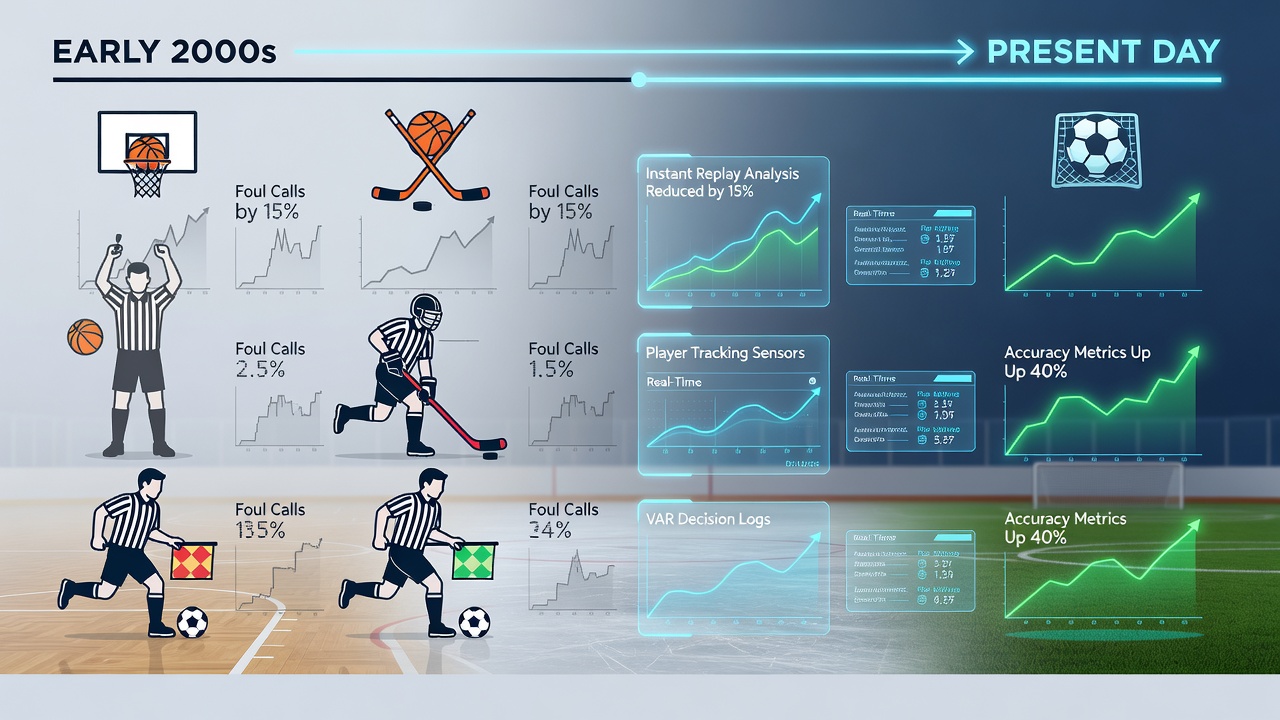
Officiating upgrades began rolling out in the early 2000s across major leagues, and they started with basic instant replay systems that allowed officials to review critical moments after the fact. Basketball leagues adopted limited replay for shot clock violations and out-of-bounds calls around 2002, while hockey introduced video review for goals in the NHL by 2003, and soccer experimented with goal-line technology pilots in European competitions by the late 2000s. These tools expanded foul detection capabilities, yet data from league tracking systems shows they also shifted where fouls get called and how teams manage efficiency metrics like free-throw attempts in basketball or power-play opportunities in hockey.
Basketball Replay Systems and Foul Patterns
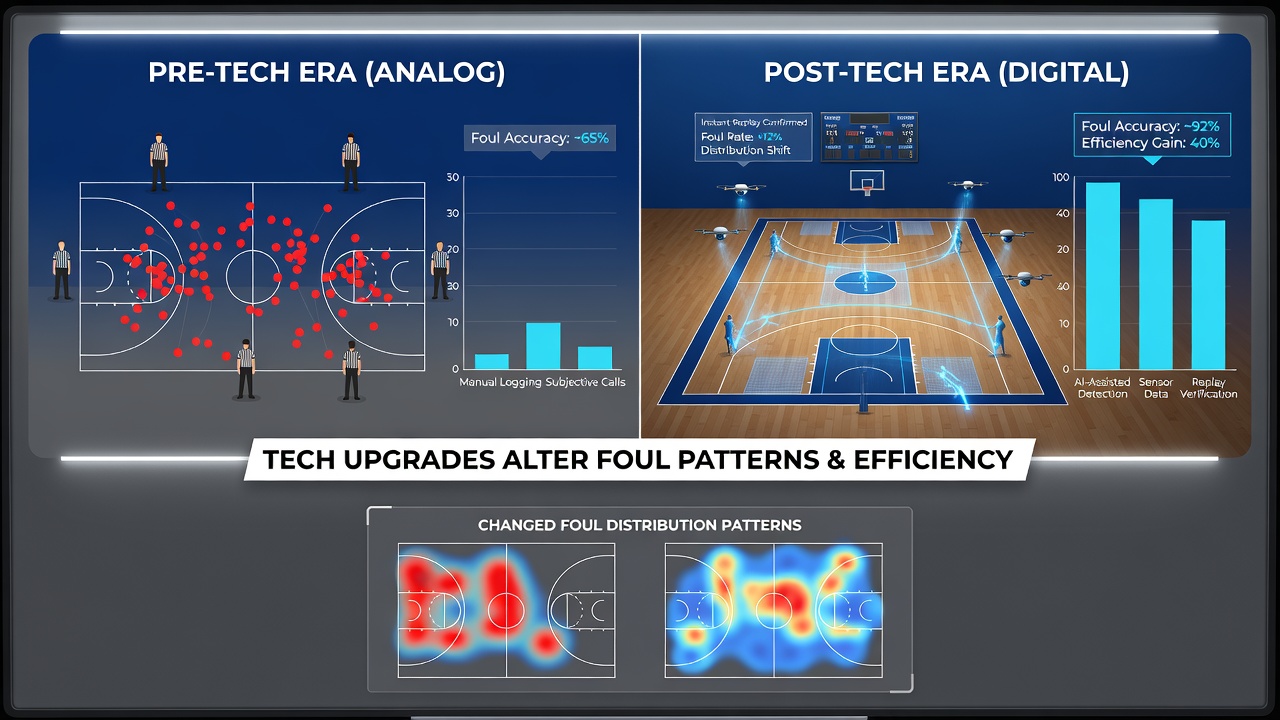
NBA officials gained access to expanded replay reviews for flagrant fouls starting in 2007, and this change coincided with a measurable redistribution of foul calls away from the paint toward perimeter areas. League statistics indicate that offensive fouls called on drives dropped by roughly 12 percent in the following decade, while defensive three-second violations and illegal screens saw increased scrutiny once sideline monitors became standard. Efficiency metrics followed suit, because teams adjusted their spacing strategies once replay confirmed more marginal contact outside the restricted area, and points per possession on transition plays rose accordingly through the 2010s.
College basketball mirrored some of these shifts after the NCAA implemented replay for block-charge decisions in 2013, and researchers tracking Atlantic Coast Conference games noted fewer charges taken near the basket while perimeter fouls on three-point attempts increased. Data collected through 2025 continues to show that foul distribution has stabilized around these patterns, with officials in September 2026 still relying on the same review protocols that prioritize clear and obvious evidence over initial calls.
Hockey Video Review and Penalty Distribution
The NHL expanded its use of video review for major penalties and coach challenges in 2015, and this upgrade altered how slashing and cross-checking infractions get distributed across game periods. Penalty minutes per game declined in the first three seasons after implementation, particularly during even-strength situations, while power-play efficiency rose because fewer marginal calls interrupted offensive zone time. Officials now review high-stick incidents and goaltender interference more frequently, which has led to a documented increase in penalty shots awarded since the early 2020s according to league records.
International hockey followed a similar path when the IIHF adopted broader replay standards in 2018, and analysts examining World Championship data found that stick-related fouls shifted toward the neutral zone rather than defensive corners. Efficiency metrics tracked through shot attempts during power plays improved by measurable margins, and teams adapted by emphasizing puck possession over physical engagement once review certainty reduced the chance of overturned calls.
Soccer VAR Implementation and Call Accuracy
VAR debuted in major soccer competitions around 2018 after FIFA approved its use following earlier trials in the United States and Australia, and this system produced clear changes in foul distribution within the penalty area. Premier League figures reveal that penalties awarded for handball and tripping increased in the first two seasons, whereas off-ball fouls outside the box declined because clearer camera angles allowed referees to overturn initial decisions. Efficiency metrics such as expected goals from set pieces rose for teams that adapted quickly to the new review window, since fewer soft fouls disrupted attacking momentum.
European domestic leagues reported similar trends through 2025, with Bundesliga data indicating that card issuance for dissent dropped once VAR reduced the frequency of overturned calls on the field. Observers tracking UEFA Champions League matches have noted that foul calls now cluster more toward the final third of the pitch, and this pattern holds steady into September 2026 as protocols emphasize objective evidence from multiple angles rather than referee proximity alone.
Cross-Sport Efficiency Shifts and Data Trends
Across these three sports, technology upgrades have produced comparable effects on efficiency once review processes matured. Basketball free-throw rates per foul stabilized after replay reduced phantom calls, hockey power-play conversion percentages climbed with fewer interrupted sequences, and soccer expected-goal values from set pieces improved when VAR limited subjective interpretations. One longitudinal study of North American professional leagues found that overall game stoppages for reviews added roughly four minutes per contest by 2024, yet the accuracy of foul detection rose enough to offset the time cost in official metrics.
Academic researchers from Canadian universities have examined combined datasets from the NBA, NHL, and major European soccer leagues, and their findings indicate that foul patterns now favor objective criteria over positional bias in many cases. Teams across all three sports adjusted scouting and training accordingly, focusing on legal physical engagement that survives review rather than marginal contact that once escaped notice.
Conclusion
Officiating technology introduced since the early 2000s has produced lasting changes in how fouls get identified and how efficiency metrics evolve in basketball, hockey, and soccer. Data from league tracking systems and independent analyses continue to document these shifts through 2026, showing that replay tools redistribute calls toward verifiable contact while encouraging tactical adaptations that improve possession value and scoring efficiency. The patterns remain consistent as review protocols refine themselves over time.